
Electromyography (EMG)
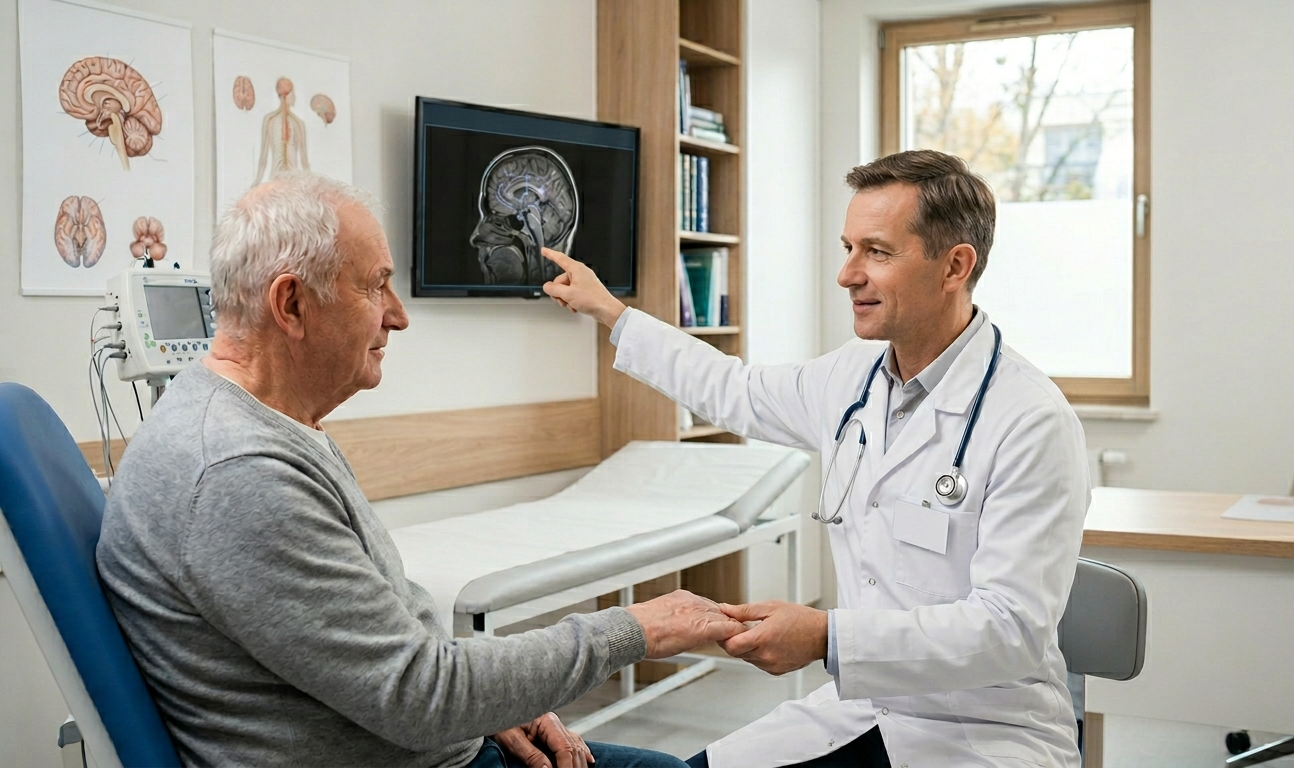
Diagnostics of nerve and muscle diseases
Electromyography (EMG) at Park Medical in Cieszyn is a specialized neurological examination that allows for the evaluation of peripheral nerve and muscle function. It helps determine whether the cause of symptoms is nerve damage, muscle illness, or impaired nerve impulse conduction. We perform the test for patients from Cieszyn and surrounding areas, including Skoczów, Ustroń, Wisła, Zebrzydowice, and Český Těšín.
The test is performed for patients reporting symptoms such as:
- numbness and tingling in the limbs,
- burning sensation in the hands or feet,
- limb pain,
- muscle weakness,
- muscle atrophy,
- sensory disturbances,
- suspected neuromuscular diseases.
The tests are performed by a neurologist, Maciej Huć, MD, PhD, specializing in neuromuscular diseases, certified by the Polish Society of Clinical Neurophysiology (PTNK) to perform EMG tests since 2014.
Patients receive the test description and results immediately after the examination.
What does an EMG test involve?
An EMG test allows for the evaluation of peripheral nerve function and muscle electrical activity.
Depending on the diagnostic indications, surface electrodes placed on the skin and fine needle electrodes used to assess muscle function are utilized. This makes it possible to precisely determine the location and extent of nerve or muscle damage.
Depending on the results obtained and in agreement with the patient, the scope of the test can be expanded or narrowed down to achieve the most accurate diagnosis possible.
Indications for an EMG test
The EMG test is used in the diagnosis of many neurological conditions, particularly:
Nerve compression syndromes
- carpal tunnel syndrome,
- cubital tunnel syndrome,
- other peripheral nerve compression syndromes.
Traumatic injuries
- peripheral nerve injuries,
- brachial plexus injuries,
- consequences of limb trauma.
Neuropathies and polyneuropathies
- diabetic neuropathy,
- metabolic neuropathies,
- toxic neuropathies,
- immune-mediated neuropathies, including Guillain-Barré syndrome.
Muscle diseases
- primary and secondary myopathies,
- muscle weakness,
- muscle atrophy.
Neuromuscular junction disorders
- myasthenia gravis,
- tetany.
If necessary, specialized diagnostic tests are also performed, including a myasthenic test and a tetany test.
How to prepare for the test?
Before the test, you should:
- inform the doctor about any anticoagulant and antiplatelet medications you are taking,
- wear clothing that allows easy exposure of the examined area of the body,
- avoid applying creams, ointments, or moisturizing lotions to the examined areas on the day of the test,
- bring previous EMG test results, if any were performed.
Contraindications for the test
Przed wykonaniem badania należy poinformować lekarza o:
- rozruszniku serca,
- niektórych metalowych implantach,
- ciąży,
- zmianach skórnych w miejscu badania (szczególnie infekcyjnych lub ropnych),
- aktywnej infekcji przebiegającej z nasilonymi objawami.
Ostateczną kwalifikację do badania przeprowadza lekarz.
Konsultacja neurologiczna
Jeżeli oprócz badania EMG potrzebna jest konsultacja neurologiczna, prosimy o jej wcześniejsze zarezerwowanie. Ze względu na dokładnie zaplanowany harmonogram badań nie ma możliwości przeprowadzenia dodatkowej, nieumówionej konsultacji bezpośrednio po badaniu.
Dlaczego warto wykonać badanie EMG w Park Medical?
✔ Badanie wykonywane przez certyfikowanego neurologa specjalizującego się w chorobach nerwowo-mięśniowych
✔ Wynik wraz z omówieniem dostępny bezpośrednio po badaniu
✔ Możliwość rozszerzenia diagnostyki w zależności od obrazu klinicznego
✔ Diagnostyka cieśni nadgarstka, neuropatii, uszkodzeń nerwów i chorób mięśni
✔ Indywidualne podejście i kompleksowa opieka neurologiczna
Check the price list
Jak przebiega badanie EMG?
Badanie rozpoczyna się od krótkiego wywiadu oraz oceny zgłaszanych dolegliwości.
W zależności od wskazań lekarz może wykonać:
- badanie przewodnictwa nerwowego (ENG), podczas którego nerwy pobudzane są niewielkimi impulsami elektrycznymi,
- elektromiografię igłową (EMG), polegającą na ocenie aktywności mięśni przy użyciu cienkiej elektrody.
Całość trwa zazwyczaj od 30 do 60 minut, w zależności od zakresu diagnostyki.
Czy badanie EMG boli?
Podczas badania przewodnictwa nerwowego odczuwalne są krótkie impulsy elektryczne, które mogą powodować niewielki dyskomfort.
Jeżeli wykonywane jest badanie igłowe, cienka elektroda wprowadzana do mięśnia może wywołać krótkotrwałe uczucie ukłucia. Dla większości pacjentów badanie jest dobrze tolerowane.