
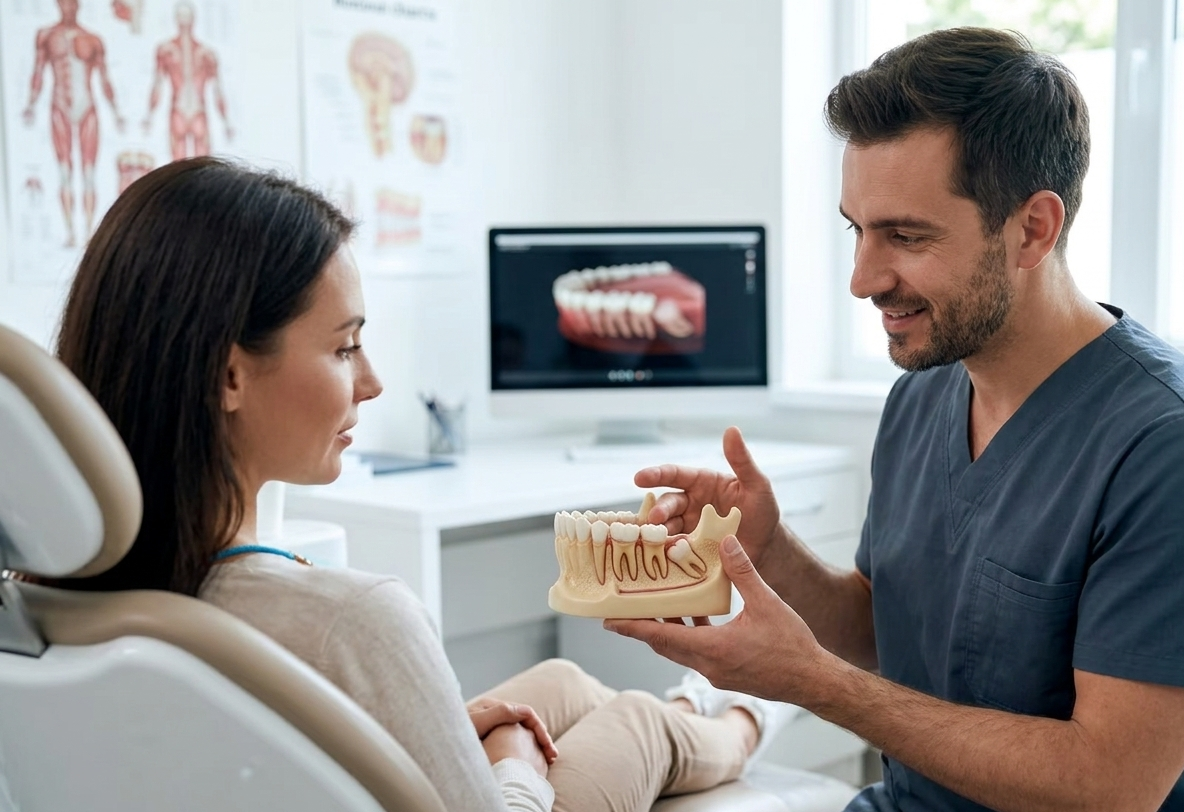
Wisdom teeth, or third molars, are often the most problematic teeth in our mouth. Quite frequently, they become impacted teeth—meaning they have not erupted properly and remain trapped in the bone or under the gum due to a lack of space in the dental arch. At Park Medical, we ensure that their removal procedure is safe, painless, and completely transparent for the patient.
Why can an impacted wisdom tooth cause problems?
Teeth that lack sufficient space in the jaws can grow at an angle and lead to serious issues:
- Caries, inflammation, and pain in the wisdom teeth themselves. The area around wisdom teeth is generally difficult to clean, making it a breeding ground for bacteria, which causes tooth decay and gum inflammation; this can lead to severe pain and serious inflammatory conditions.
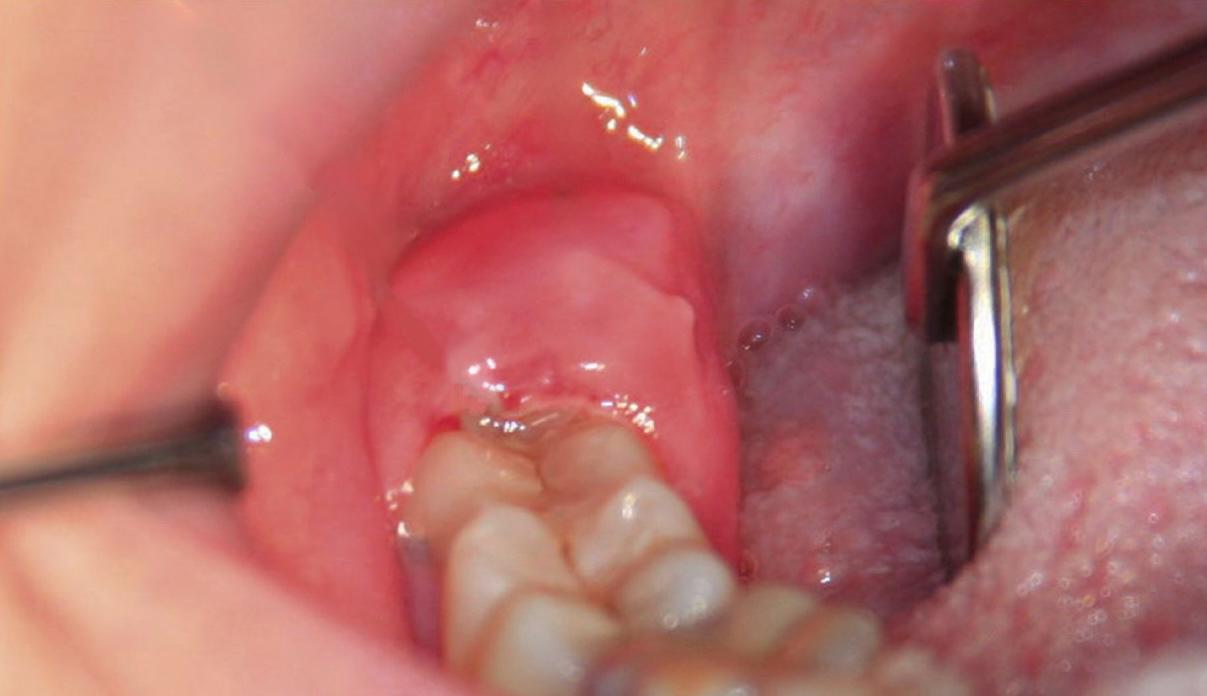
Inflammation over the wisdom tooth.
- Damage to adjacent teeth: a malpositioned wisdom tooth exposes its neighbor—the second molar—to tooth decay; this cavity develops in a location that is very difficult to treat effectively (the back surface), which in the worst-case scenario leads to the loss of a „healthy” tooth. (Image 2 caption: decay of the second molar in a very unfavorable location due to the wisdom tooth, advanced with pulpitis; very guarded prognosis)

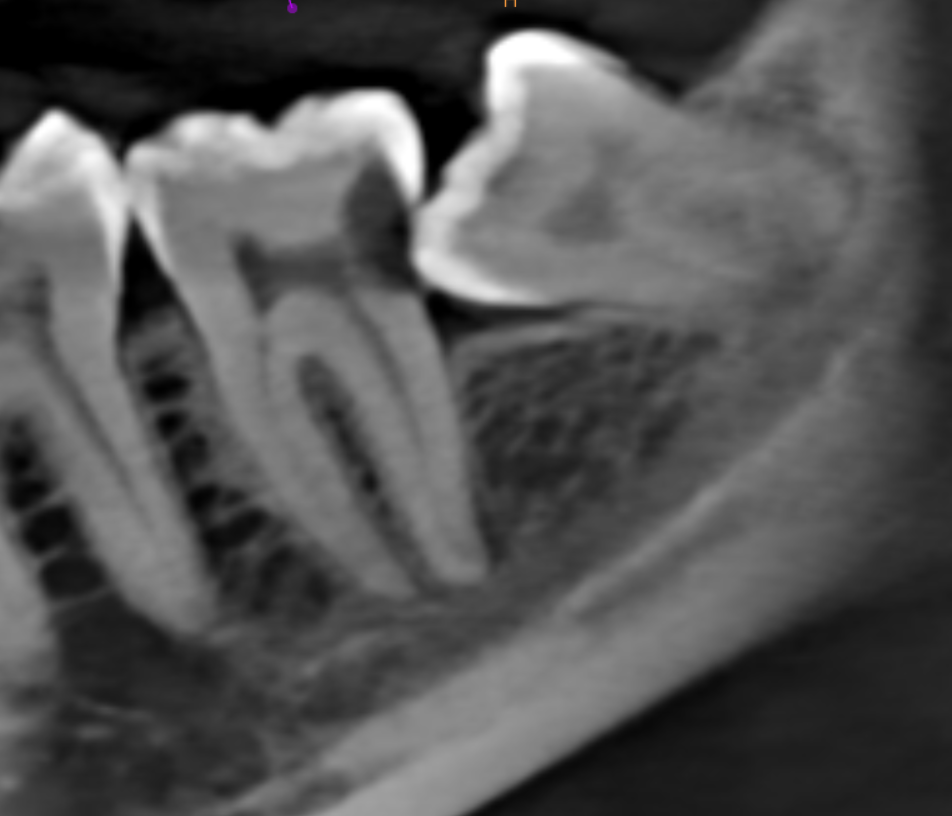
Tooth decay of the second molar in a very unfavorable location due to the wisdom tooth, advanced with pulpitis; very guarded prognosis
What does the extraction procedure look like?
Fortunately, not every wisdom tooth needs to be extracted. If a wisdom tooth is properly aligned, healthy, and functional, it can easily remain in the mouth. Likewise, fully impacted teeth that cause no symptoms and have no indications for removal are usually kept under observation only.
However, if removing a wisdom tooth is necessary, modern oral surgery allows the procedure to be performed safely and as comfortably as possible for the patient:
- Diagnostics: We start with a consultation and precise X-ray diagnostic imaging—three-dimensional computed tomography (CBCT)—to carefully plan the procedure.
- Anesthesia: The procedure is performed under local anesthesia, the same as during routine dental treatment, and is completely painless.
- Procedure: The surgeon gently exposes the tooth. If necessary, it is sectioned into smaller parts, facilitating safe removal with minimal tissue invasion.
Preparing for your visit – step by step
To ensure the procedure and healing process go as comfortably and smoothly as possible, keep the following guidelines in mind:
- Meals and hygiene – Eat a nutritious meal before your appointment—you should not eat for about 2–3 hours after tooth extraction. It is also important to brush your teeth thoroughly and clean the interdental spaces with dental floss.
- Important for smokers – Smoking cigarettes before the procedure and during the healing period is strongly discouraged. Nicotine and reduced tissue oxygenation can significantly impede proper healing and increase the risk of complications.
- Medications – Prepare in advance the prescribed or recommended pain relievers (e.g., ibuprofen, paracetamol, or metamizole) so you don't have to look for a pharmacy after the procedure. In some cases, the surgeon may also prescribe an antibiotic prior to the treatment—be sure to take it according to your doctor's instructions.
Recovery: How to take care of yourself after the procedure?
Your role in the healing process is key. For a few days following the extraction:
- Apply cold compresses to the cheek to reduce swelling; this is most effective during the first 24 hours after the procedure,
- Avoid intense physical exertion,
- Avoid irritating foods,
- Avoid hot baths,
- Follow your doctor's recommendations regarding painkillers or antibiotics.
After the procedure, every patient receives detailed instructions regarding post-operative care, including a printed copy.
Important: in case of severe pain, the need to take large doses of painkillers, prolonged fever, swelling, or anything that raises concern—please contact the reception immediately!
FAQ – Frequently Asked Questions
- Does every wisdom tooth need to be removed?
No. The decision to extract a wisdom tooth is made by an oral surgeon based on examination and diagnostics. If a wisdom tooth is healthy, correctly aligned, and fits within the dental arch, it can stay. Fully impacted teeth that do not cause problems also do not always require removal. - I want to have a wisdom tooth removed—can I schedule the extraction right away?
Prior to the procedure, a surgical consultation and appropriate diagnostic imaging are required. The doctor will evaluate the tooth's position, discuss the removal process, potential post-procedure discomfort, and post-operative instructions so that the patient can prepare properly. - Do wisdom teeth cause dental crowding?
Current medical evidence indicates that wisdom teeth do not exert enough force to push other teeth and cause crowding. This also means that preventive removal of wisdom teeth does not prevent such issues. - How long does healing take after a wisdom tooth extraction?
The initial stage of healing usually lasts from a few days to about two weeks. Full tissue and bone regeneration can take several months. - When should you schedule a consultation?
Pain in the back of the jaw, difficulty opening the mouth, swelling, or recurring inflammation may be signs that it is worth consulting an oral surgeon. It is also important to remember to have regular dental check-ups – preferably at least once every 6 months – as they allow problems to be detected before symptoms appear.
At Park Medical, we provide comprehensive care – from precise diagnostics and safe surgical treatment to support during the recovery period. Patient comfort and safety are our top priority.